Assessment of Exposure to Microbial and Chemical Pollution in US Regional Air near the Transboundary Tijuana River Watershed
The "Healthy Air" Study
Project Summary
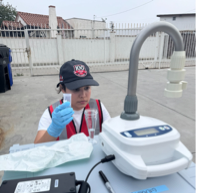
The Tijuana River and Estuary flows north from Mexico into the US and is contaminated with sewage, industrial chemicals and urban runoff. The purpose of this study is to understand pollution within homes located in the border communities and to find ways to lower children’s health risks. Our study focuses on identifying chemical and biological markers, especially antibiotic-resistant microbes, associated with Tijuana River and Estuary pollution and reducing community exposure to these complex pollutant mixtures.
Aims and Activities
Our Healthy Air study has the following aims:
Determine whether water pollution from the Tijuana River and Estuary is contributing to air pollution in nearby US communities (San Ysidro, Imperial Beach, and Nestor, CA).
Measure how much of this Tijuana River and Estuary pollution is getting into the homes of community members and exposing children in the home,
Find ways of lowering family exposure risks in the home through interventions, in partnership with community members
Participate
As part of this study, we are asking 100 families with small children residing near the Tijuana River and Estuary and its surrounding communities of San Ysidro, Imperial Beach, and Nestor, CA, to participate
If you are interested in hearing more about the study,
Contact Dr. Jenny Quintana at 619-594-1688 or HOME VISIT – email the Healthy Air study at SDSUHealthyAir@gmail.com or call 858-292-1416 (English or Spanish), or contact Casa Familiar at (619) 428-1115 and ask for Mayra Hernandez.
Why This Research Matters
Protect Health
We will find out what harmful
microbes and chemicals from
the Tijuana River are getting
into the air. This will help
reduce uncertainty and give
families in border
communities clear answers
about possible health risks.
Improve How We Monitor Pollution
We will develop better tools to detect complex pollutants in water and air—both microbes and chemicals—that are often missed by routine testing.
Understand Local Exposure
By examining indoor samples from homes and studying
children's microbiomes, we will determine whether pollution from the river is making its way inside and how it might affect families.
Create Practical Solutions
Our study will provide clear,
science and community-based
recommendations to help
households and local leaders
take steps to protect health.
Prepare for the Future
Our study will develop methods
and data that can be used in
other regions facing similar
challenges, helping other
communities